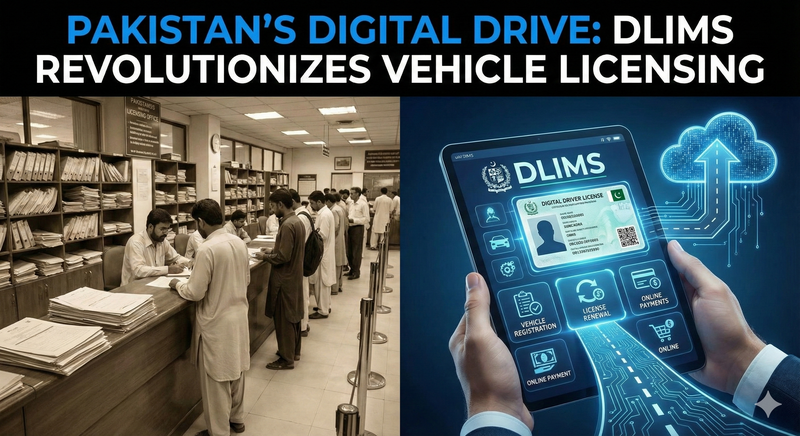
Pakistan's Digital Drive: DLIMS Revolutionizes Vehicle Licensing
Published on December 30, 2025
In an era defined by technological advancement, governments worldwide are striving to modernize their public services. Pakistan has made significant strides in this direction, particularly with its motor vehicle license system. The introduction and widespread adoption of the Driving License Issuance Management System (DLIMS) have largely digitized the process, moving it from a cumbersome, often opaque, manual operation to a streamlined, transparent, and efficient digital platform. This transformation marks a pivotal moment in Pakistan’s administrative reforms, impacting millions of citizens and significantly enhancing public safety and governance.
The Need for Digital Transformation: Before DLIMS
Prior to the full implementation of DLIMS, Pakistan's driving license system faced numerous challenges. Manual record-keeping was prone to errors, data loss, and lengthy processing times. The decentralized nature of operations often led to inconsistencies, making it difficult to verify license authenticity across different regions. This environment unfortunately fostered opportunities for corruption, the issuance of fraudulent licenses, and a general lack of accountability. For citizens, the process was often a source of frustration, involving multiple visits to government offices, extensive paperwork, and unpredictable waiting periods. These inefficiencies not only burdened the public but also posed serious implications for road safety, as the integrity of the licensing process could not be fully guaranteed.
DLIMS: The Backbone of Modern Licensing
The Driving License Issuance Management System (DLIMS) was conceived as a comprehensive solution to these systemic issues. It is an integrated, centralized, and digitized platform designed to manage the entire lifecycle of a driving license, from initial application to issuance, renewal, and record maintenance. Initially launched in Punjab, its success led to its phased adoption across other provinces, making it a nationwide standard for driver licensing. DLIMS leverages information technology to create a robust database, ensuring that all licensing-related activities are recorded, verified, and accessible through a secure digital network.
Key Features Enhancing User Experience and System Integrity
DLIMS is characterized by several innovative features that underpin its success and broad acceptance:
- Online Application and Renewal: Citizens can now initiate the application process for a learner's permit or renew their existing licenses online, reducing the need for physical visits and long queues. This convenience has been a major relief for the public, saving time and effort.
- Biometric Verification for Authenticity: A cornerstone of the system, biometric verification (fingerprints and facial recognition) at various stages of the application process ensures the applicant's identity is accurately confirmed. This virtually eliminates the possibility of fraudulent applications and enhances the credibility of the issued licenses.
- Centralized Database for Seamless Access: All driving license data is stored in a secure, centralized database. This allows law enforcement agencies, traffic police, and licensing authorities across Pakistan to instantly verify a driver's credentials, regardless of where the license was issued.
- Transparency and Anti-Corruption Measures: By digitizing every step, DLIMS significantly reduces human intervention and the discretion previously available to officials, thereby curbing corruption and nepotism. The system maintains a transparent audit trail for all transactions.
- Enhanced Efficiency and Convenience: Processing times have been drastically cut. What once took weeks or even months can now be completed in a matter of days or even hours, depending on the service. This efficiency translates directly into citizen convenience.
- Contribution to Road Safety: By ensuring that only eligible and properly tested individuals receive licenses, and by maintaining accurate records of driving history and violations, DLIMS indirectly contributes to improved road safety standards across the country.
- Integration with Law Enforcement: The centralized nature of DLIMS allows for real-time integration with police systems, enabling quick verification of licenses during traffic stops and helping identify drivers with outstanding violations or those operating with suspended or fake licenses.
Navigating the DLIMS Journey: From Learner to License Holder
The process of obtaining a driving license through DLIMS is designed to be user-friendly, albeit with stringent checks:
- Learner's Permit Application: An applicant typically starts by applying for a learner's permit, often through an online portal or a dedicated service center. Required documents are uploaded or submitted, and biometric data is captured.
- Theory Test: After a waiting period (usually 42 days, as per regulations, to allow for learning), applicants must pass a computerized theory test that assesses their knowledge of traffic laws and road signs.
- Practical Driving Test: Upon passing the theory test, candidates proceed to a practical driving test conducted by trained professionals. This assesses their actual driving skills in a controlled environment.
- Final License Issuance: Successful candidates' data is updated in the DLIMS, and their high-security, tamper-proof driving license card is printed and dispatched. The card often includes a microchip or QR code for enhanced security and verification.
- Renewals and Duplicates: The system also facilitates smooth renewals and the issuance of duplicate licenses in case of loss or damage, often allowing for online submissions and home delivery of renewed cards.
Impact and Overcoming Hurdles
The impact of DLIMS on Pakistan’s administrative landscape has been profound. It has significantly streamlined a critical public service, fostered greater trust between citizens and government, and provided a robust framework for law enforcement. The efficiency gained has reduced opportunities for corruption, leading to a fairer and more equitable system. Furthermore, by maintaining comprehensive data, DLIMS has become an invaluable tool for urban planning, traffic management, and policy-making related to transport and road infrastructure.
However, the journey has not been without its challenges. Initial rollout phases faced hurdles related to internet penetration in remote areas, digital literacy among segments of the population, and the need for continuous system maintenance and upgrades. Ensuring data security and protecting against cyber threats remain ongoing priorities. Efforts continue to be made to address these issues through expanded digital access initiatives, public awareness campaigns, and robust IT infrastructure development.
The Road Ahead: Future Enhancements and Aspirations
The success of DLIMS lays a strong foundation for future advancements. There is potential for even greater integration with other government services, such as vehicle registration and excise and taxation departments, to create a holistic digital ecosystem for motorists. Further development of mobile applications, AI-driven traffic management solutions, and the incorporation of advanced telematics could further enhance road safety and urban mobility. As Pakistan continues its digital transformation journey, DLIMS stands as a testament to the power of technology in revolutionizing public service delivery and fostering good governance.
Pakistan's adoption of DLIMS represents a significant leap forward in modernizing its public administration. By embracing digitization, the country has transformed a historically problematic system into one that is efficient, transparent, and citizen-centric. DLIMS has not only simplified the process of obtaining a driving license but has also bolstered the integrity of the system, contributing to safer roads and a more accountable government. It serves as a shining example of how strategic investment in technology can yield substantial benefits for both the state and its citizens.
 Practise signs after reading
Install Free App
Practise signs after reading
Install Free App